


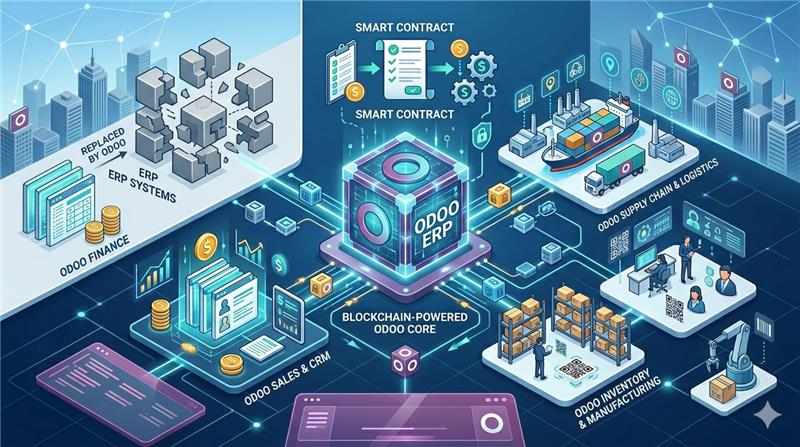
In the modern corporate landscape, Enterprise Resource Planning (ERP) systems serve as the central nervous system of any organization. However, as global supply chains become more complex and cyber threats more sophisticated, traditional ERP systems are facing limitations. Enter Blockchain Technology—the catalyst for the next major evolution in business management.
From Silos to Transparency: The ERP Journey
Early ERP systems were designed to break down internal departmental silos. While Cloud ERP made data accessible anywhere, it still relied on a centralized database, which can be a single point of failure. The integration of Blockchain moves ERP from a “Single Version of Truth” managed by one entity to a “Shared Version of Truth” verified by a network.
How Blockchain Redefines ERP Architecture
Blockchain acts as a decentralized, immutable ledger. When merged with ERP, it introduces three game-changing elements:
- Immutable Data Integrity: Once a transaction is recorded in the blockchain-linked ERP, it cannot be altered or deleted. This creates an audit trail that is 100% tamper-proof.
- Enhanced Supply Chain Visibility: Instead of waiting for manual updates, every stakeholder in the supply chain can see the real-time movement of goods, reducing delays and disputes.
- Decentralized Trust: Multiple organizations (vendors, partners, and clients) can interact within the same ecosystem without needing a middleman to verify the data.
The Power of Smart Contracts
One of the most significant evolutionary leaps is the use of Smart Contracts. These are self-executing contracts with the terms of the agreement directly written into code.
- Example: In a Blockchain-powered ERP, an invoice can be automatically paid the moment the system verifies the digital receipt of goods, removing weeks of administrative back-and-forth.
Key Benefits for Modern Enterprises
The synergy between ERP and Blockchain offers several strategic advantages:
- Reduced Operational Costs: By eliminating manual reconciliations and third-party intermediaries.
- Superior Security: Protection against data breaches through advanced cryptographic hashing.
- Real-time Auditing: Auditors can verify financial records in real-time rather than waiting for end-of-month reports.
The Future: A New Standard for ERP
As platforms like Microsoft Dynamics 365 and Odoo continue to explore decentralized features, we are moving toward an era of “Consortium ERPs.” In this future, different companies will share a secure blockchain layer to conduct business with unprecedented speed and trust.